Delhi is the capital of the Union Territory of India, is one of the largest cities in the world. This busy and populous city, which has been ruled by different rulers for about 11 times, has traces of history and tradition scattered around every corner.
Along with this, the various structures of the Mughal period enriched the culture of Delhi. Hence, millions of tourists visit Delhi every year to see various attractions including Delhi Jama Masjid, traditional bazaar Chandni Chowk, Qutub Minar and tombs of various emperors.
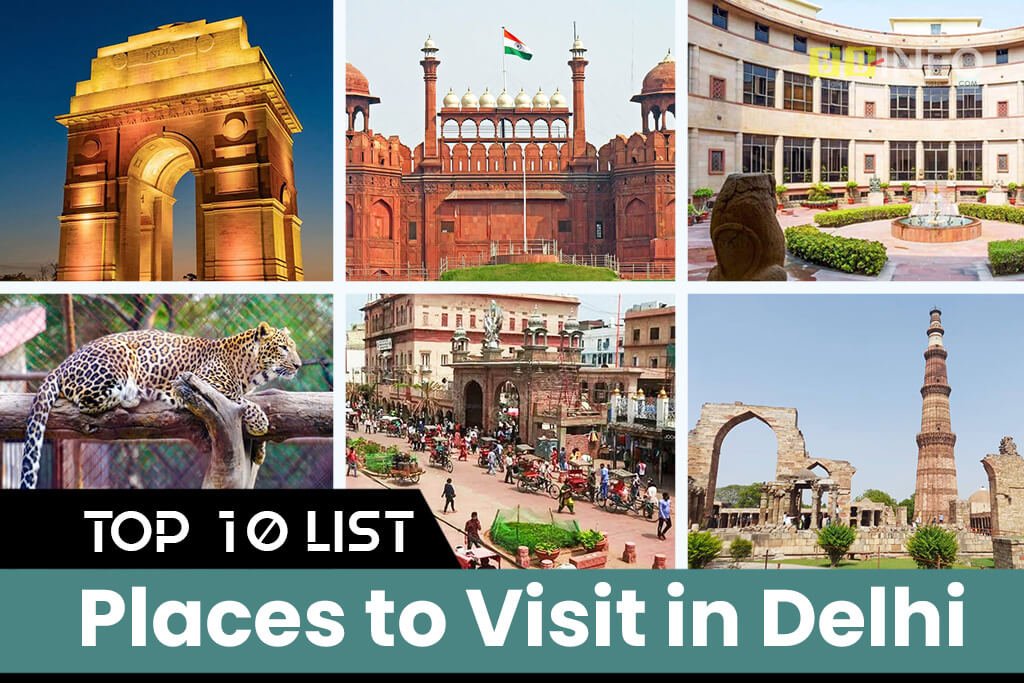
Best Places to Visit in Delhi
There are many places to visit in Delhi. Even if you want to travel on foot, you can see many places, but if you travel through a tour guide, you can visit more places in less time.

Indian Gate
India Gate Monument was built in 1931 to honor the martyrs of the First World War and the Afghanistan War. The monument looks most beautiful in the evening light. Many families visit the park for picnics on holidays. The India Gate Parade held on Republic Day is one of the most prestigious events in India, without seeing its true significance.
Overview
- Name: India Gate
- Location: Rajpath, New Delhi, India
- Type: War Memorial Arch
- Architect: Sir Edwin Lutyens
- Construction Started: 10 February 1921
- Inaugurated: 12 February 1931
- Height: 42 meters (138 feet)
- Material Used: Bharatpur sandstone
- Style: Triumphal Arch (inspired by Arc de Triomphe in Paris)
Purpose & Historical Significance
- Built to honor the 84,000 soldiers of the British Indian Army who died during:
- World War I (1914–1918)
- Third Anglo-Afghan War (1919)
- Names of over 13,000 soldiers (including some British officers) are inscribed on the gate.
Amar Jawan Jyoti (Eternal Flame)
- Added in 1972 after the India–Pakistan War of 1971
- A tribute to unknown soldiers
- Consists of a black marble plinth, reversed rifle, helmet, and continuously burning flame
- In 2022, the flame was merged with the flame at the National War Memorial, located nearby.
Architectural Details
- Designed by: Sir Edwin Lutyens, the chief architect of New Delhi
- Style: Classical European, like triumphal arches in Rome or Paris
- Decorations:
- Inscriptions of soldiers’ names
- Wreaths and military insignias
- The word “INDIA” inscribed on both sides
- Originally intended to have a statue of King George V; it was later removed.
Location & Accessibility
- Located at: Eastern end of Rajpath, in the heart of New Delhi
- Nearby landmarks:
- Rashtrapati Bhavan (Presidential residence)
- Parliament House
- National War Memorial
- Children’s Park
Visitor Information
- Entry Fee: Free
- Open: 24/7 (but best visited during daylight or evening hours)
- Best Time to Visit: October to March (cooler weather)
- Facilities:
- Toilets
- Drinking water
- Food vendors
- Parking nearby (limited)
- Evening Experience:
- India Gate is beautifully lit at night
- Light and fountain shows are common
- Popular for picnics and photography
How to Reach
Metro
- Nearest Metro Station: Central Secretariat (Yellow & Violet lines)
- About 2 km away – take an auto-rickshaw or walk
Bus
- Multiple Delhi Transport Corporation (DTC) buses stop nearby
Cab/Taxi
- Widely available via Uber, Ola, or local services
Things to Do
- Photography, especially at night
- Strolling around the gardens and Rajpath
- Visit the National War Memorial
- Street food tasting (ice cream, chaat, corn, etc.)
- Family picnics
- Attend Independence Day or Republic Day parades (with permission)
Rules & Guidelines
- No climbing on the monument
- No drones
- No littering
- Police and security are present
- Maintain silence and respect near memorials
Fun Facts
- Originally called All India War Memorial
- India Gate has no religious symbols—making it a secular monument
- Featured in numerous Bollywood movies like Rang De Basanti and Delhi 6
- Hosts various cultural and national events
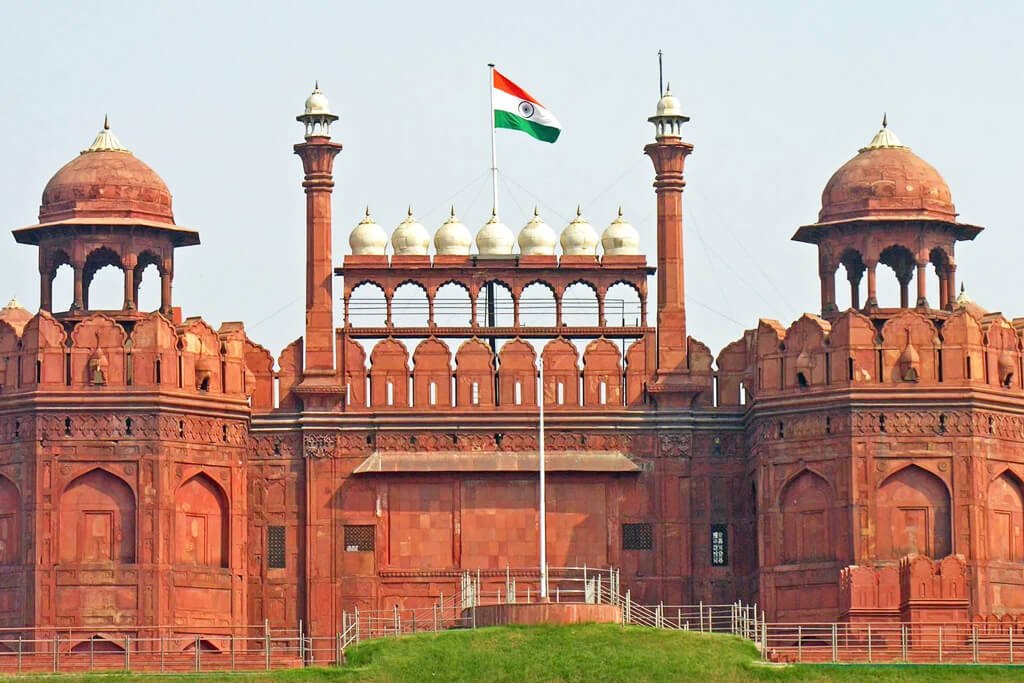
Red Fort
The pride of India’s Mughal Empire and another landmark, the “Red Fort” is a major tourist attraction in Delhi. Built in 1638 in red sandstone, the fort is a fine example of Mughal architecture. Mughal Emperor Shah Jahan built this fort when he shifted his capital to Delhi.
A large number of people gather inside the fort to watch the light show every evening at 6 p.m. The Red Fort was recognized as a World Heritage Site by UNESCO in 2007. If you want, you can visit Digambara Jain Temple, Shish Ganj Gurdwara and Parathe Wali Gali located near the fort.
This fort is open every day except Monday. The fort entry fee is Rs 35 for Indians but Rs 500 for foreigners to enter the fort. The light show fee is Rs.80 for adults and Rs.30 for children.
Overview
- Name: Red Fort (Hindi: लाल क़िला, Urdu: لال قلعہ)
- Location: Netaji Subhash Marg, Chandni Chowk, Old Delhi, India
- Constructed by: Mughal Emperor Shah Jahan
- Construction Started: 1638
- Completed: 1648
- Architect: Ustad Ahmad Lahauri (also credited with Taj Mahal)
- UNESCO World Heritage Site: Since 2007
Historical Significance
- Built when Shah Jahan moved the Mughal capital from Agra to Delhi.
- It served as the main residence of the Mughal emperors for nearly 200 years (till 1857).
- The fort was later occupied by the British, and then used as a military camp.
- Every Independence Day (15th August), the Indian Prime Minister hoists the national flag and delivers a speech from its ramparts.
Architectural Highlights
- Style: Mughal architecture with Persian, Timurid, and Indian influences.
- Materials Used: Primarily red sandstone; some structures inside use white marble.
Key Structures Inside Red Fort:
- Lahori Gate – Main entrance used today
- Delhi Gate – Another public entrance on the south side
- Chatta Chowk – Covered market street inside the fort
- Diwan-i-Aam – Hall of public audience
- Diwan-i-Khas – Hall of private audience (where the famous Peacock Throne once stood)
- Mumtaz Mahal – Now a museum
- Rang Mahal – “Palace of Colors” used by royal women
- Moti Masjid – Pearl Mosque built by Aurangzeb
- Hayat Bakhsh Bagh – “Life-bestowing Garden” with fountains and pavilions
- Hammam – Royal bath complex
Visiting Hours
- Open: Tuesday to Sunday (Closed on Monday)
- Timings: 9:30 AM – 4:30 PM (may vary slightly with seasons)
- Best Time to Visit: October to March
Entry Fee
| Category | Indian Citizens | Foreign Tourists |
|---|---|---|
| General Entry | ₹35 | ₹500 |
| With Museum | ₹55 | ₹600 |
- Tickets available online (ASI website or apps) and at the gate
Light & Sound Show
- Held in the evening (in Hindi and English)
- Explores Mughal history through visuals and sound
- Tickets: ₹60–₹80 approx.
- Timings: Change seasonally – check locally
How to Reach Red Fort
By Metro
- Nearest Station: Chandni Chowk (Yellow Line) or Lal Qila (Violet Line)
- From metro: 10–15 mins walk or short rickshaw ride
By Bus
- Buses stop near Red Fort via ISBT, Daryaganj, or Jama Masjid routes
By Car/Taxi
- Parking available near Jama Masjid and Chandni Chowk
Things to Do
- Explore museums inside the fort:
- Museum of Archaeology
- Museum of India’s Freedom Struggle
- Walk through historic bazaars like Meena Bazaar
- Take guided tours or rent audio guides
- Attend cultural events or festivals (like Bharat Parv)
- Visit nearby attractions:
- Jama Masjid
- Chandni Chowk
- Raj Ghat
- Gurudwara Sis Ganj Sahib
Guidelines for Visitors
- No drones, smoking, or littering
- Bags may be checked at entry
- Photography is allowed, but no flash or tripods inside museums
- Wear comfortable shoes and carry water
Trivia & Fun Facts
- Originally called Qila-e-Mubarak (Blessed Fort)
- Was once decorated with gems, silver ceilings, and a Peacock Throne
- British looted and destroyed many artifacts in 1857
- Influenced the design of later buildings across India
- Inspired the architecture of Rashtrapati Bhavan
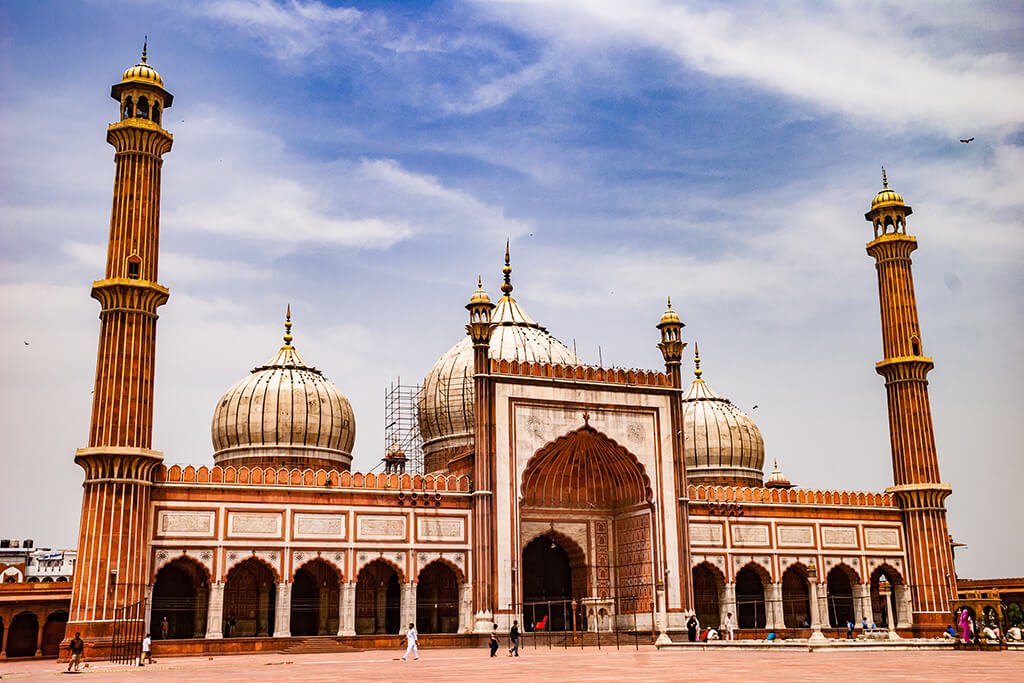
Jama Masjid
Jame Masjid located at Chandni Chowk is one of the largest mosques in India. Around 25,000 worshipers can pray together here. The mosque was built in 1656 during the reign of Shahjahan for about 12 years. The mosque has three gateways, four towers and a minaret with a height of 40 meters. There is no cost to enter Jame Masjid, but one has to spend money to climb the minaret of the mosque.
Overview
- Full Name: Masjid-i-Jehan-Numa (meaning “World-Reflecting Mosque”)
- Popular Name: Jama Masjid
- Location: Off Netaji Subhash Marg, Chandni Chowk, Old Delhi, India
- Constructed By: Mughal Emperor Shah Jahan
- Construction Period: 1650–1656
- Architectural Style: Indo-Islamic + Mughal architecture
- Capacity: Over 25,000 worshippers in its courtyard
Architecture & Design
- Architect: Ustad Khalil
- Material Used: Red sandstone and white marble
- Main Features:
- Three large domes (white marble with black stripes)
- Two towering minarets – 40 meters (131 ft) tall
- Four towers and three entrance gates
- Large courtyard (1000+ square meters)
- Staircases lead to different entrances
- Prayer hall adorned with beautiful calligraphy and inlays
Religious Importance
- One of the largest mosques in India
- Still actively used for daily prayers, especially Friday (Jumu’ah) and Eid prayers
- A major pilgrimage and tourist attraction
- Center for Islamic teachings and community events
Historical Significance
- Commissioned by Shah Jahan (who also built the Taj Mahal and Red Fort)
- Originally called Masjid-i-Jehan-Numa
- Used by royal families and later preserved by the British post-1857 revolt
- Has witnessed many historical events, including Independence-era speeches and protests
What to See Inside
- Minarets: Visitors can climb one minaret (the southern one) for panoramic views of Old Delhi and Red Fort.
- Holy Relics:
- Hair of Prophet Muhammad
- A chapter from the Qur’an written on deerskin
- Sandal believed to be worn by the Prophet
Timings
- Open Daily: 7:00 AM to 12:00 PM, and 1:30 PM to 6:30 PM
- Closed: During daily prayer times (especially from 12:00 to 1:30 PM)
- Best Time to Visit: Early morning or just before sunset for views and photos
Entry Fee
- Indian Nationals & Foreigners: Free to enter mosque courtyard
- Camera/Mobile Photography: ₹300–₹400 (subject to change)
- Climbing Minaret: ₹100–₹200 per person (only men allowed for safety reasons)
Dress Code & Visitor Etiquette
- Modest clothing required (arms, legs, and head covered)
- Robes are available at the gate for tourists
- Remove shoes before entering the mosque
- Quiet and respectful behavior is expected
- No drones or flash photography
How to Reach
Metro
- Nearest Station: Jama Masjid (Violet Line) or Chawri Bazaar (Yellow Line)
- Walking distance: 5–10 minutes
Other Options
- Auto-rickshaws and cycle rickshaws from Chandni Chowk, Red Fort, or Daryaganj
- Public and private buses
Nearby Attractions
- Red Fort (Lal Qila) – 5 mins walk
- Chandni Chowk Market – One of the oldest bazaars in India
- Raj Ghat – Mahatma Gandhi’s memorial
- Paranthe Wali Gali – Famous food lane
- Gurudwara Sis Ganj Sahib – Historical Sikh temple
Things to Do
- Climb the southern minaret for a view of Old Delhi
- Explore the intricate Mughal designs and carvings
- Visit during Eid to witness mass prayers
- Sample local food from the stalls near the mosque
- Capture stunning sunset photos
Guidelines & Tips
- Avoid Fridays and major religious holidays unless you’re visiting for prayer (very crowded)
- Be cautious of guides and camera fee collectors outside – always confirm with the official entry staff
- Secure your belongings before entering
- Avoid clicking photos during prayer times
Fun Facts
- Built on a hill known as Bho Jhala, giving it a commanding view of the area
- Construction cost: Around ₹10 lakh (about $1.5 million today)
- Once the largest mosque in the world until others were built later
- Holds relics believed to date back to Prophet Muhammad’s era

Qutub Minar
Qutub Minar, the tallest in India, is considered a monument to the beginning of the Mughal era and their conquests. The 70 meter tall 5-tiered minaret was built after Qutb-ud-din Aibak’s defeat of the Hindu empire. It’s hard to miss the wonderful view of Charpa from the top of the minaret. India’s first Masjid Qutub-ul-Islam is also located here.
Overview
- Location: Mehrauli, South Delhi, India
- Type: Victory Tower / Minaret
- Built by: Qutb-ud-din Aibak (founder of the Delhi Sultanate)
- Construction Began: 1192 CE
- Completed by: Iltutmish (his successor) in 1220; later renovated by Firoz Shah Tughlaq
- UNESCO World Heritage Site: Since 1993
Architectural Facts
- Height: 72.5 meters (238 feet)
- Diameter:
- Base: 14.3 meters
- Top: 2.7 meters
- Material: Red sandstone and marble
- Stories: 5 distinct storeys, separated by balconies with intricate stone brackets
- Style: Indo-Islamic with Arabic calligraphy and Hindu motifs
Historical Significance
- Built to celebrate Muslim dominance in Delhi after the defeat of the last Hindu kingdom.
- Also served as a minaret to call for prayers at the adjacent Quwwat-ul-Islam Mosque—Delhi’s first mosque.
- Represents the beginning of Muslim rule in India.
Notable Features Within the Qutub Complex
Quwwat-ul-Islam Mosque
- First mosque built in India (1198)
- Constructed from reused materials of 27 demolished Hindu & Jain temples
Iron Pillar
- 7.2 meters tall, dating back to the 4th century (Gupta Empire)
- Rust-resistant: Still a mystery how it hasn’t corroded in over 1600 years
- Inscriptions attribute it to King Chandragupta II
Alai Darwaza
- Main gateway to the mosque built by Alauddin Khalji in 1311
- Fine example of Indo-Islamic architecture
Tombs & Other Structures
- Tomb of Iltutmish (builder of the Qutub’s second and third floors)
- Alai Minar (an unfinished minar, twice the planned height of Qutub)
- Madarsa, minars, and garden areas
Visiting Information
- Open: Daily (Monday to Sunday)
- Timings: 7:00 AM to 5:00 PM
- Best Time to Visit: October to March (pleasant weather)
Entry Fee
| Category | Entry Fee |
|---|---|
| Indian Citizens | ₹30 |
| Foreign Tourists | ₹500 |
| Children (below 15) | Free |
How to Reach
Metro
- Nearest Station: Qutub Minar Metro Station (Yellow Line)
- From metro: 1.5 km, reachable by auto-rickshaw or on foot
By Road
- Accessible by cab (Ola/Uber), rickshaw, or personal vehicle
- Parking available nearby
Things to Do
- Explore the Qutub Minar complex and read historic inscriptions
- Take photographs of the minaret, tombs, and ruins
- Examine the Iron Pillar up close
- Attend heritage walks conducted by local guides
- Visit Mehrauli Archaeological Park nearby
Guidelines
- Climbing the tower is not allowed (banned since 1981 due to an accident)
- No drones allowed
- Maintain cleanliness
- Respect the heritage site and structures
- Dress modestly and wear comfortable shoes
Fun Facts
- Qutub Minar has verses from the Qur’an inscribed on its walls
- The name “Qutub” means “axis” or “pole” in Arabic
- There’s controversy over whether the minar was built over a destroyed Hindu temple (some historians believe so)
- The minar has survived multiple earthquakes and was repaired by several rulers
Nearby Attractions
- Mehrauli Archaeological Park
- Jamali Kamali Mosque
- Zafar Mahal
- Garden of Five Senses
- Hauz Khas Village (short drive away)
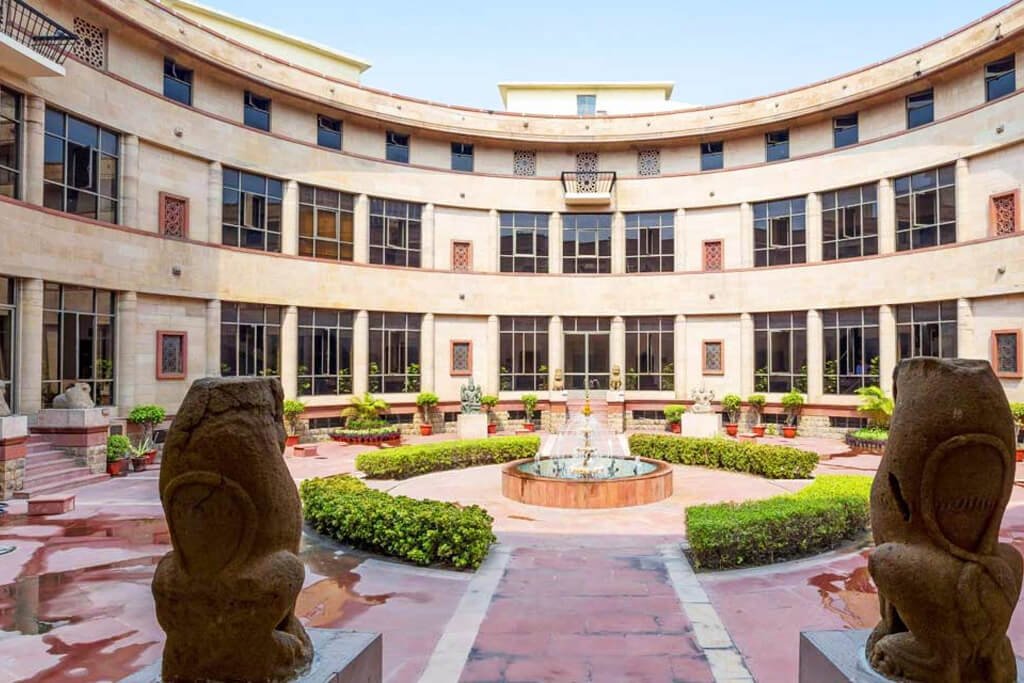
The National Museum
The National Museum has about 4,600 years old Harappan temple dances, painting gallery, huge temple chariots, terracotta toys, pictures, bones, jewellery, bronze and copper implements, sculptures, masks, swords, musical instruments, tribal costumes etc.
The museum’s National Science Center is one of the largest science centers in the world. The museum is open from 10 am to 6 pm except Monday. Entry fee to the museum for foreign nationals is Rs 650.
Overview
- Official Name: National Museum, New Delhi
- Location: Janpath Road, Rajpath Area, Central Secretariat, New Delhi, India
- Established: 1949
- Administered by: Ministry of Culture, Government of India
- Type: National Museum of Art, History, and Culture
- Timings
- Open: Tuesday to Sunday
- Closed: Monday and Public Holidays
- Hours: 10:00 AM – 6:00 PM
Entry Fees
| Category | Ticket Price |
|---|---|
| Indian Adults | ₹20 |
| Foreign Nationals | ₹650 |
| Students (with ID) | Free |
| Children below 18 | Free |
Collections & Galleries
The National Museum houses over 2 lakh artifacts spanning 5,000 years of Indian history, from the Indus Valley Civilization to modern times.
1. Harappan (Indus Valley) Gallery
- Seals, beads, pottery, toys, tools
- Dancing Girl (bronze figurine)
- Priest King replica
2. Maurya, Shunga & Satavahana Art
- Stone and terracotta sculptures
- Examples of early Buddhist and Jain art
3. Gupta and Medieval Period Art
- Exquisite bronze and stone idols
- Evolution of Hindu iconography
4. Buddhist Art Gallery
- Statues from Gandhara, Mathura, Nalanda
- Artifacts from Sarnath and Bodh Gaya
5. Manuscripts Gallery
- Over 14,000 manuscripts in Sanskrit, Persian, Arabic, Pali
- Illustrated and gold-inked texts
6. Miniature Paintings
- Styles from Mughal, Rajput, Pahari, Deccan schools
- Rare and detailed artworks
7. Arms and Armour
- Ancient swords, daggers, shields, pistols
- Royal and ceremonial weapons
8. Jewellery Gallery
- Ornaments from tribal to Mughal era
- Made from gold, silver, precious stones
9. Textile Gallery
- Handwoven fabrics, rare textiles
- Kalamkari, Banarasi, and brocades
10. Central Asian Antiquities
- Collected by Sir Aurel Stein from ancient Silk Route cities
- Scrolls, coins, sculptures, manuscripts
11. Numismatics Gallery
- Coins from ancient to modern periods
- Rare punch-marked coins, gold and silver currency
12. Decorative Arts
- Furniture, pottery, glassware, ivory objects
- Indian craftsmanship from different dynasties
Special Exhibits & Facilities
- Temporary and rotating exhibitions
- 3D virtual walkthroughs
- Museum Shop: Books, souvenirs, crafts
- Auditorium and seminar rooms for lectures
- Cafeteria inside the premises
- Library with a rich collection of books on archaeology, art, and history
How to Reach
By Metro
- Nearest Station: Udyog Bhawan (Yellow Line)
- Walkable distance or short auto ride
By Road
- Accessible via cab, auto, or bus
- Parking available near the museum
Guided Tours
- English and Hindi tours conducted at scheduled times
- Audio Guides available in multiple languages
- Group bookings and educational tours are available with prior notice
Visitor Tips
- Photography is allowed (but no flash or tripods)
- Mobile phones must be kept on silent
- Respect the “Do Not Touch” signs
- Take your time — museum can take 2–3 hours to explore fully
- Wear comfortable footwear and carry a water bottle
Fun Facts
- The idea of the museum began with an exhibition at Rashtrapati Bhavan in 1947
- One of the few museums in India that combines archaeology, art, and anthropology
- Has rare relics from the Silk Route, Indo-Greek culture, and Persian empires
- Features VR exhibits and interactive kiosks
Nearby Attractions
- India Gate
- Rashtrapati Bhavan
- Rajpath
- National Gallery of Modern Art
- Connaught Place

Humayun’s Tomb
In 1570 Humayun’s widow Rani Haji Begum built this tomb, a unique example of Persian architecture. The vast mausoleum complex houses the emperor’s mausoleum amidst beautiful gardens. This structure has a lot in common with the Taj Mahal. Near the mausoleum is the Dargah of Nizam Al Din Auliya. Entry fee for Humayun’s Tomb is Rs 30 per person for Indians and Rs 500 for foreigners.
Overview
- Location: Mathura Road, Nizamuddin East, New Delhi
- Built By: Empress Bega Begum (wife of Humayun)
- Commissioned: 1565 CE
- Completed: 1572 CE
- Architect: Mirak Mirza Ghiyas (Persian architect)
- Architectural Style: Indo-Islamic + Persian + Mughal
- UNESCO World Heritage Site: Since 1993
Key Facts & Features
- Height: Approx. 47 meters (154 ft)
- Material: Red sandstone with white & black marble
- First garden-tomb in the Indian subcontinent
- Inspiration for later Mughal architecture, including the Taj Mahal
Architecture
- Based on Charbagh (four-part garden) layout symbolizing paradise
- Tomb stands on a massive platform (42.5m x 42.5m)
- Central chamber houses Humayun’s cenotaph
- Surrounded by eight vaulted chambers forming a symmetrical octagonal plan
- Features a double dome – an architectural innovation of the time
- Exquisite jaali (lattice) work, arches, and Persian inscriptions
Who is Buried Here?
Humayun’s Tomb complex is known as the “Dormitory of the Mughals” because more than 150 Mughal family members are buried here, including:
- Emperor Humayun
- Bega Begum (Haji Begum)
- Dara Shikoh (Shah Jahan’s son)
- Other Mughal princes, princesses, and nobles
How to Reach
By Metro:
- Nearest Metro Station: JLN Stadium (Violet Line) or Hazrat Nizamuddin
- 10–15 min walk or take an auto-rickshaw
By Road:
- Easily accessible by car, taxi, rickshaw
- Parking available at the gate
Timings
- Open: Every day (Monday to Sunday)
- Hours: 6:00 AM to 6:00 PM
- Best Time to Visit: October to March (pleasant weather)
Entry Fees (As per ASI)
| Category | Price |
|---|---|
| Indian Citizens | ₹40 |
| SAARC/BIMSTEC Citizens | ₹40 |
| Foreign Nationals | ₹600 |
| Children (below 15 years) | Free |
Other Monuments Inside the Complex
Isa Khan’s Tomb (predates Humayun’s Tomb by 20 years)
- Octagonal tomb of a noble from Sher Shah Suri’s court
- Enclosed by its own garden, mosque, and boundary walls
Barber’s Tomb (Nai-ka-Gumbad)
- Located near the southeast corner of Humayun’s Tomb
- Believed to be the tomb of Humayun’s royal barber
Arab Sarai
- Originally built to house Persian artisans
- Later used as a caravanserai (inn)
Chillah Nizamuddin Auliya
- Spiritual retreat of the Sufi saint Nizamuddin
Things to Do
- Explore the lush gardens and Mughal-style water channels
- Take stunning photographs of the tomb’s reflection in water
- Enjoy a sunrise or sunset visit for best lighting
- Visit nearby Sunder Nursery – a heritage park
- Learn from ASI signage, guided tours, and interactive displays
Tips for Visitors
- Carry water and wear comfortable shoes
- Photography is allowed, but no tripods inside tomb chambers
- Respect the site: no touching or writing on walls
- Best lighting for photography: early morning or late afternoon
- Visit early to avoid crowds
Historical Significance
- Humayun died in 1556; his wife Bega Begum oversaw the construction
- Tomb was one of the first grand monuments of the Mughal Empire
- A precursor to the Taj Mahal in Agra
- Site became a refuge during the 1857 revolt and was later restored by the British
In Popular Culture
- Filming location for documentaries, Bollywood films, and heritage shows
- Featured in travel magazines, UNESCO brochures, and art exhibits
Nearby Attractions
- Sunder Nursery (heritage park next door)
- Hazrat Nizamuddin Dargah (famous Sufi shrine)
- Purana Qila (Old Fort)
- India Gate
- Lodhi Garden
- Khan Market (for food and shopping)

Chandni Chowk
Chandni Chowk is a must visit to get a taste of the original and authentic Indian bazaar in the city of Old Delhi. Chandni Chowk offers another glimpse of Delhi’s vibrant civic life amidst the crowds, haggling and chaos. There are several temples, markets, restaurants and cheap residential hotels. If you look around the small shops of Chadani Chowk, you will find a surprising number of new ones.
Overview
- Location: Old Delhi, near Red Fort and Jama Masjid
- Founded by: Jahanara Begum, daughter of Mughal Emperor Shah Jahan
- Established in: 1650 CE
- Name Meaning: “Moonlit Square”, due to a canal that once reflected moonlight
Historical Significance
- Part of Shahjahanabad, the walled city built by Shah Jahan
- Once a royal market, it was designed with a canal (now gone) flowing through the center
- Served as a hub for merchants from Central Asia, China, and Europe
- Hosted lavish processions and royal visits during the Mughal period
Modern-Day Chandni Chowk
Now, Chandni Chowk is a vibrant, chaotic, yet incredibly colorful commercial hub, blending centuries of history with everyday life.
Famous Markets & Bazaars
Chandni Chowk is divided into smaller markets, each specializing in a specific trade:
| Market Name | Specialty |
|---|---|
| Dariba Kalan | Silver jewelry, gold ornaments, perfumes |
| Kinari Bazaar | Zari, lace, wedding wear accessories |
| Ballimaran | Footwear, optics, perfumes, old havelis |
| Khari Baoli | Asia’s largest spice market |
| Nai Sarak | School and college books, stationery |
| Chawri Bazaar | Wedding cards, paper products |
| Bhagirath Palace | Electrical goods, lights, electronics |
| Kucha Mahajani | Dry fruits, nuts, pulses |
Street Food Heaven
Chandni Chowk is a must-visit for food lovers, offering legendary Indian street food:
| Eatery / Shop | Famous For |
|---|---|
| Paranthe Wali Gali | Stuffed parathas (aloo, paneer, banana!) |
| Karim’s | Mughlai food (kebabs, nihari, biryani) |
| Jalebi Wala | Giant syrupy jalebis |
| Ghantewala Halwai | Historic sweet shop (closed, but legendary) |
| Haldiram’s | Clean vegetarian snacks and thalis |
| Natraj Dahi Bhalla | Dahi bhalla and aloo tikki |
| Kuremal Mohanlal Kulfi | Natural fruit kulfi |
| Old Famous Jalebi Wala | Crisp jalebi with rabri |
Nearby Historical Attractions
- Red Fort (adjacent to Chandni Chowk)
- Jama Masjid (10 min walk)
- Gurudwara Sis Ganj Sahib
- Fatehpuri Masjid
- Begum Samru’s Haveli
- Town Hall (British-era structure)
How to Reach
By Metro:
- Chandni Chowk Metro Station (Yellow Line) – Gate No. 5 is closest
- Also accessible from Lal Qila Station (Violet Line)
By Road:
- Vehicles are not allowed deep inside market lanes
- Best to take cycle rickshaw, e-rickshaw, or walk
Popular Experiences
- Heritage walk through narrow lanes
- Rickshaw ride through spice market and havelis
- Food tasting tour
- Photowalk: vibrant colors, street life, and ancient architecture
- Shopping for bridal wear, handicrafts, and antiques
Famous Photo Spots
- Red Fort from the main road
- Paranthe Wali Gali’s cramped colorful eateries
- The vibrant spice stacks at Khari Baoli
- Jama Masjid courtyard with pigeons
- Rooftop views from restaurants near Jama Masjid
What to Buy
- Bridal lehengas and sarees
- Ittar (traditional perfume)
- Spices and dry fruits
- Handicrafts and antiques
- Jewellery (especially silver)
- Religious items, books, and calendars
Insider Tips
- Best Time to Visit: Morning to noon (less crowded), October–March
- Closed Days: Most shops are closed on Sunday
- Wear comfortable shoes – lots of walking involved
- Carry cash – many vendors may not accept cards
- Watch your belongings – can get very crowded
- Bargain smartly – prices can be inflated for tourists
In Popular Culture
Chandni Chowk has been featured in many Bollywood movies:
- Delhi-6
- Chandni Chowk to China
- Kabhi Khushi Kabhie Gham
- Blackmail
- TV travel shows and food vlogs
Suggested Itinerary (Half Day)
- Start at Red Fort
- Walk to Jama Masjid
- Eat at Karim’s or Paranthe Wali Gali
- Explore Kinari Bazaar & Dariba Kalan
- End at Khari Baoli Spice Market
- Optionally visit Sis Ganj Sahib Gurudwara
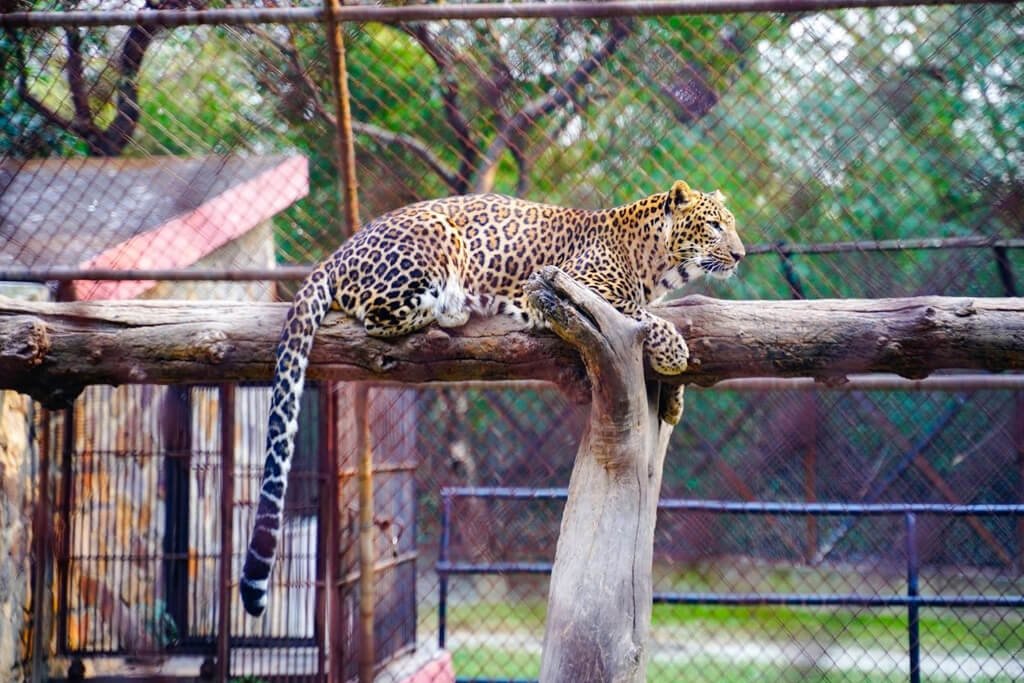
National Zoological Park
National Zoological Park is a sanctuary for rare and endangered wild animals. White tigers and Indian elephants are particularly notable here.
Apart from the above mentioned places of interest there are more – Lodi Garden, Garden Of Five Senses, Gurudwara Bangla Sahib, Gandhi Smriti And Mahtma Gandhi Memorial, Nizamuddin Dargah, Jantar Mantar, Raj Ghat, Safdarjung’s Tomb etc.
Other notable temples located in Delhi include – Iskcon Temple, Lotus Temple, Akasardham Temple, Chattapur Temple and Laxminarayan Temple etc.
Overview
- Also Known As: Delhi Zoo
- Location: Mathura Road, adjacent to Purana Qila (Old Fort), near India Gate, New Delhi
- Established: 1st November 1959
- Managed by: Ministry of Environment, Forest and Climate Change, Government of India
- Area: Approx. 176 acres
- Status: Member of Central Zoo Authority (CZA)
Timings
| Day | Time |
|---|---|
| Summer (Apr–Oct) | 8:30 AM to 4:30 PM |
| Winter (Nov–Mar) | 9:30 AM to 4:00 PM |
| Closed on | Every Friday and National Holidays |
Entry Fee
| Category | Price |
|---|---|
| Indian Adults | ₹80 |
| Indian Children (5–12 years) | ₹40 |
| Foreign Nationals | ₹400 (adults), ₹200 (children) |
| Senior Citizens | ₹40 |
| Differently Abled Persons | Free |
What to See – Major Attractions
The zoo is home to over 1,350 animals from 130+ species, including mammals, birds, and reptiles from India and abroad.
Mammals
- Royal Bengal Tiger
- Asiatic Lion
- Leopard
- Blackbuck
- Indian Rhinoceros
- Zebra
- Hippopotamus
- Sloth Bear
- Chinkara
- Elephant
- Hoolock Gibbon
- Sambar Deer
- Jaguar
Reptile House
- Indian Rock Python
- King Cobra
- Indian Star Tortoise
- Water Monitor Lizard
- Gharial
- Crocodiles
Birds
- Peacocks
- Emus
- Sarus Cranes
- Grey Hornbill
- Painted Stork
- Parakeets
- Owls
- Kite & Vulture species
- Waterfowl in lake areas
Environment & Layout
- The zoo is built around a central lake.
- Divided into two major parts:
- One side: Herbivores and Deer Park
- Other side: Carnivores and Reptiles
- Lush green surroundings, walking trails, and shaded paths
- Battery cars available for full ride tours
Photography
- Allowed: Mobile phones, digital cameras
- Restricted: Flash photography, tripods, drones
- Professional photography/videography requires prior permission
Food & Facilities
- Outside food not allowed (to protect animals)
- Drinking water available inside
- Small kiosks for packaged snacks & refreshments
- No food stalls inside the zoo area itself
- Clean public restrooms at various locations
How to Reach
By Metro:
- Nearest Metro Station: Supreme Court (Pragati Maidan) – Blue Line
- 10–15 minutes walk from gate
By Road:
- Easily accessible via taxi, auto-rickshaw, and private vehicle
- Parking available near entrance gate
Ideal for:
- Family outings
- School trips
- Nature lovers and wildlife photographers
- Educational visits
Tips for Visitors
- Visit early in the morning for best animal visibility
- Wear comfortable shoes and a hat (in summer)
- Avoid plastic; zoo encourages eco-friendly visits
- Respect barriers; do not feed animals
- Follow signboards and staff instructions
- Expect to spend 2 to 3 hours inside
Historical Background
- Initially proposed in 1951
- Designed by Major Weinman, a Swiss zoo specialist
- Opened to the public on 1 November 1959
- Renamed as National Zoological Park in 1982
Educational Programs
- Wildlife awareness camps
- Zoo education programs for students
- Signage and animal boards explaining species and conservation status
- Wildlife Week (October) celebration
Nearby Attractions
- Purana Qila (Old Fort)
- National Science Centre
- India Gate
- Humayun’s Tomb
- National Gallery of Modern Art
Conservation Role
- Plays an active role in captive breeding programs of endangered species like:
- Asiatic Lion
- Bengal Tiger
- Indian Rhinoceros
- Helps raise awareness about biodiversity and wildlife protection
Best time to travel to Delhi
Delhi is unbearably hot in summer and Konkan is cold in winter. So one should travel to Delhi avoiding very cold and hot days. In that case February, March, October and November are the best time to visit Delhi. And if you go to Delhi during Puja, you can discover Delhi as a different city.
How to get around Delhi
If you keep 2 days to visit the popular places of Delhi, you can visit them very well. You can make a list of what you want to visit. But the easiest way to explore Delhi is to take a city tour package from a tour agency. You can visit Delhi with a day tour package.
For this, if you tell the hotel where you will be staying, they will make an arrangement. If you are in Paharganj, there are many agencies around and you can talk to them and get the package you want.
AC tourist bus will tour many places. Day tour packages are usually around Rs 300-500 per person. And if some of you want to travel together, you can hire a taxi for 1800-2000 rupees for the whole day.
Where will you stay
Paharganj is the best place to stay in Delhi on a budget. There are many hotels you can choose according to your choice and budget. And Delhi has several good quality hotels near Chandni Chowk and Red Fort.
Hotel Anshuman, Hotel Palace Heights, Air Port Hotel Grand Lawson, Air Port Hotel Lotus, Hotel Ashoka Castle, Hotel Da Caves, Hotel La Mount, Hotel Euro International, Hotel Vatika Palace and Namaskar Hotel for double occupancy between Rs.500 and Rs.650 go
You can take help of OYO App for online hotel booking.
Where to eat
Delhi is a heavenly food hub for foodies. Delhi has such a variety of flavors that it’s hard to explain. From street food to Mughlai and international cuisines are available here.
Indian food at Kebab Gali, various items of local Delhi vegetables at Haldiram, Old Delhi food at Karim’s, Dosa at Sagar Ratna, Asian food at Asian House, Sushi at Sushi House, Biryani at Dees Biryani and Indian curries at Chawla Chik.
Using Zomato app will give you an idea about various restaurants and food in Delhi.
Where to buy what?
You can buy many types of handicrafts, handwoven bags and wearable clothes at cheap prices in Delhi haat and Chandni Chowk.
Delhi Travel Advice
- Delhi is a very densely populated and busy city so the roads are always jammed. So if you want to go somewhere, try to go out with time.
- Agra is not far from Delhi, you can visit Taj Mahal and Fort from Agra in one day.
- If you want to go during special festivals (Eid, Puja), make arrangements in advance.
- Avoid local water and drink bottled water.
- There is a fact called “Delhi Belly” in Delhi, so be sure to eat wisely and keep essential medicines with you.
- Mosquitoes are very common in Delhi so it is better to carry odomos or fabric roll on.
- Dress as modestly as possible in Delhi, and avoid going out alone at night.
- Try to enjoy Holi or Diwali festival with any local family in Delhi, the joy will double.
- Be sure to buy at a bargain price.
- If you use the metro line in terms of travel, the cost will be much less.
People also searching : Best Places to visit in Delhi, Delhi tourist place, Delhi to agra distance, Best Places to visit in Delhi, Delhi tourist place, Delhi to agra distance, Best Places to visit in Delhi, Delhi tourist place, Delhi to agra distance, Best Places to visit in Delhi, Delhi tourist place, Delhi to agra distance.
Best Places to visit in Delhi, Delhi tourist place, Delhi to agra distance, Best Places to visit in Delhi, Delhi tourist place, Delhi to agra distance, Best Places to visit in Delhi, Delhi tourist place, Delhi to agra distance, Best Places to visit in Delhi, Delhi tourist place, Delhi to agra distance, Best Places to visit in Delhi, Delhi tourist place, Delhi to agra distance
Best Places to visit in Delhi, Delhi tourist place, Delhi to agra distance, Best Places to visit in Delhi, Delhi tourist place, Delhi to agra distance, Best Places to visit in Delhi, Delhi tourist place, Delhi to agra distance, Best Places to visit in Delhi, Delhi tourist place, Delhi to agra distance, Best Places to visit in Delhi, Delhi tourist place, Delhi to agra distance
Best Places to visit in Delhi, Delhi tourist place, Delhi to agra distance, Best Places to visit in Delhi, Delhi tourist place, Delhi to agra distance, Best Places to visit in Delhi, Delhi tourist place, Delhi to agra distance, Best Places to visit in Delhi, Delhi tourist place, Delhi to agra distance, Best Places to visit in Delhi, Delhi tourist place, Delhi to agra distance
]]>